
Have you ever seen the movie Inside Out? This Pixar film personifies our core emotions and uses powerful storytelling to communicate the importance of feeling all feelings, not just the pleasant ones. Each of our core emotions serve a purpose. But what does that have to do with leadership?
In The 15 Commitments of Conscious Leadership, the authors discuss the importance of leading from the head, the heart, and the gut. To be a great leader, they say, you must develop your emotional intelligence. Research supports this statement.
But how do we go about developing our emotional intelligence? The authors recommend starting by feeling all feelings. In other words, identifying emotions, moving through them, and appropriately releasing these feelings.
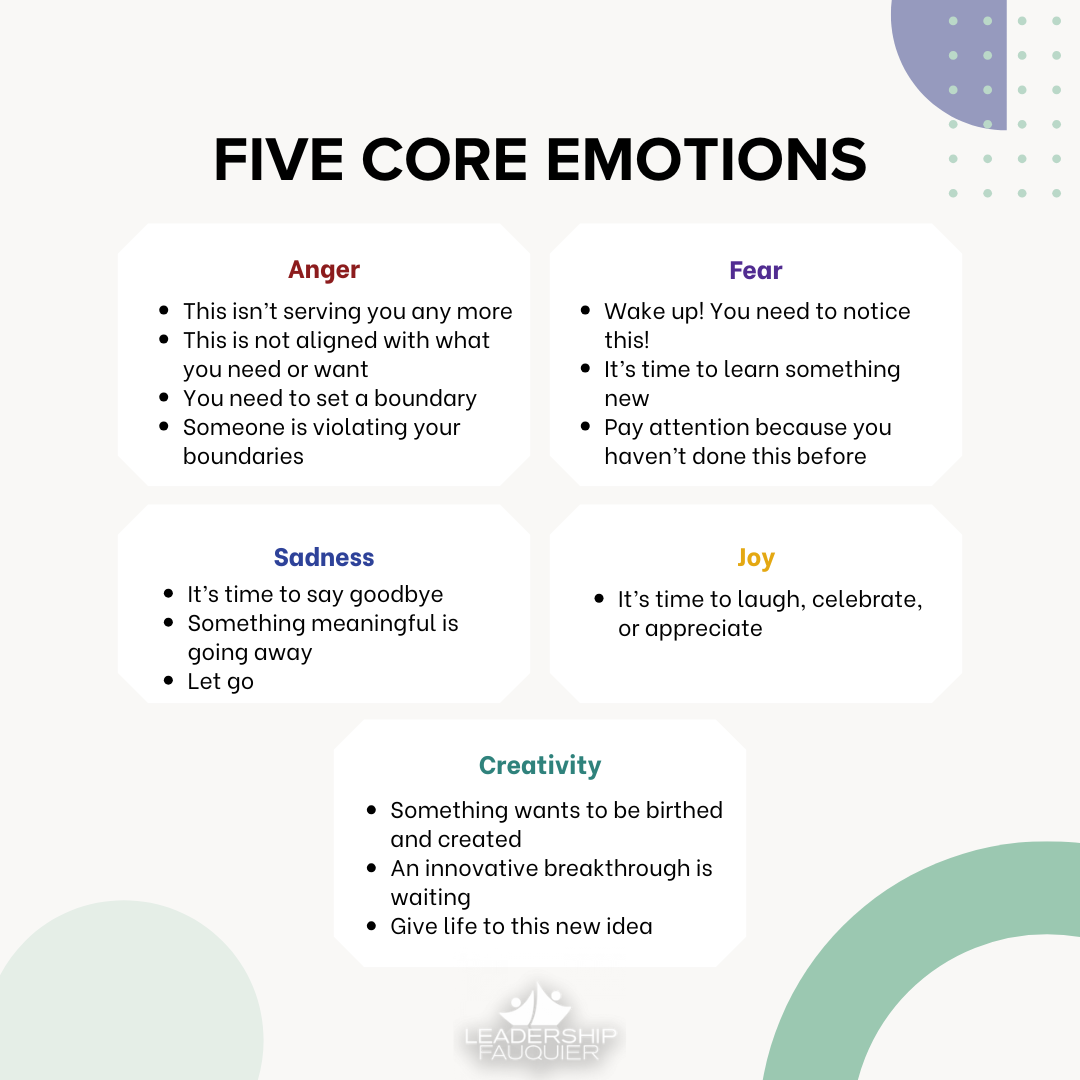
Let’s walk through that process, focusing on the five core emotions: anger, sadness, joy, fear, and creativity.*
First of all, what do our emotions tell us?
Working Through Emotions
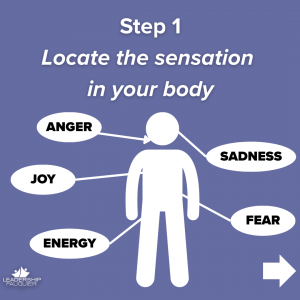
Each of the core emotions tends to lodge itself in a different part of the body. If you’ve had butterflies in your stomach, you’ve felt the sensation of fear in your belly. When your throat tightens like you are about to cry or it feels like your heart is physically breaking, you are experiencing sadness in your throat, face, and chest. Joy might rise up the spine or ignite the core. And creativity can be experienced as a tingling sensation throughout the body, especially in the erogenous zones.
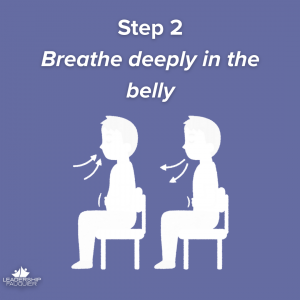
Take a few deep breaths in and out, gently, and all the way down into your belly.

The authors provide a question: “Can I allow these sensations to be here.” In other words, do not resist or repress the emotion. Appreciation can be more challenging but is focused on the idea that our emotions are trying to tell us something useful.
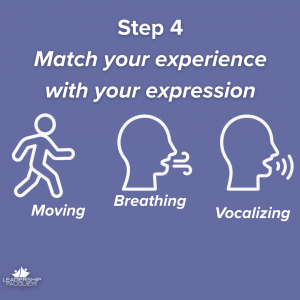
This is where you release the feeling. If you just talk about your feelings, you often recycle the feelings and risk turning them into a longer term mood rather than a 90-second emotion. Instead of talking, get rid of them physically. Move your body, breathe in a way that matches the emotion, or vocalize by making a sound. Think about how dogs growl or cats hiss. Let the emotion leave your body.
Ready to lead with more presence, clarity, and emotional intelligence?
Join our Leadership Fauquier community newsletter for more tools, insights, and opportunities to grow your leadership practice: